
Tritan
Tritan™ is a next-generation copolyester material launched by Eastman Chemical Company in 2007, powered by Eastman’s revolutionary recycling technology that transforms single-use plastic waste into durable material that is completely free of bisphenol A (BPA-Free). As an emerging eco-friendly material in the eyewear industry, Tritan™ is renowned for medical-grade safety, optical-grade transparency, and superior chemical resistance.
X&C is an official partner of Eastman and will continue to offer consumers the alternative of eco-friendly, recycled products.
Scene-Specific Suitability
_

Children's eyewear
Children's activity eyewear with drop resistance + BPA-free double safety assurance; Next-generation safety choice for children's eyewear
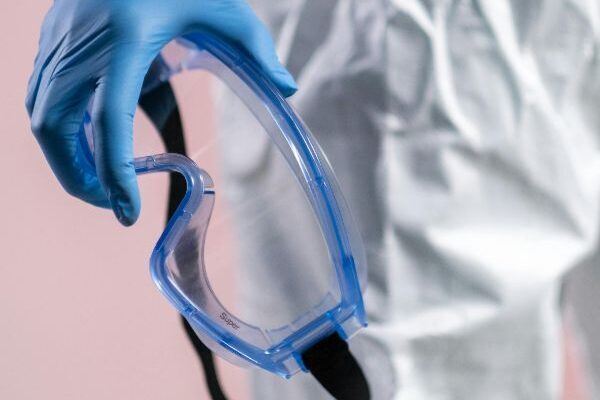
Medical goggles/face shields
Resistant to disinfectants (alcohol, sodium hypochlorite); BPA-Free

Food industry eyewear
Kitchens, baking, food service - BPA-Free, compliant with food-contact material regulations
Detailed Characteristics
_
- Medical-grade safety: Certified by U.S. FDA 21 CFR 177.1315 for food contact and NSF/ANSI 51 standards—the only transparent plastic approved for baby bottles
- Excellent optical performance: >90% light transmittance, <1% haze, Abbe number ~45 — lower dispersion than PC
- High toughness & impact resistance: Izod notched impact strength 650-850 J/m, approximately 5-8× that of CR-39, approaching PC levels
- Superior chemical resistance: Resistant to dishwasher detergents, grease, sweat, sunscreen—chemically superior to PC and nylon
- Moderate heat resistance: operating range -20°C to +100°C; cannot be thermoformed
- Eco-friendly attributes: Free of BPA, BPS, BPF and other bisphenols; recyclable; no toxic gases when incinerated
Origin & Manufacturing
_
- Monomer ratio: Precise ratio of cyclohexanedimethanol (CHDM) to terephthalic acid (PTA), with modified diols for performance adjustment
- Melt polycondensation: High-temperature vacuum polymerization at 260-290°C, molecular weight controlled at 20,000-30,000 g/mol
- Pelletizing & drying: Pellet cutting followed by 2 hours drying at 80°C
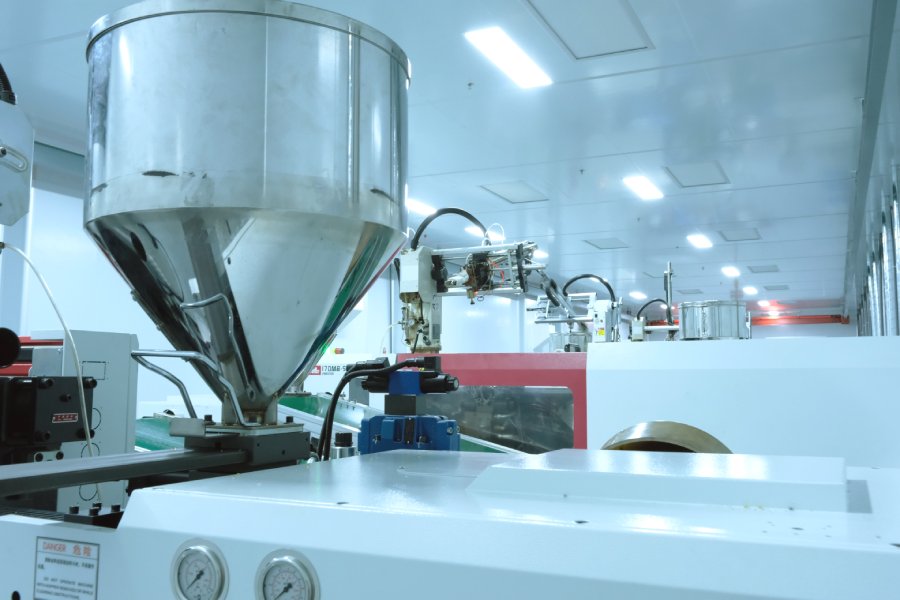
- Precision injection: Barrel temperature 260-280°C, mold temperature 60-80°C, suitable for thin-wall complex designs
Comparative Analysis
_
Tritan™’s core advantage is the perfect balance of safety and stability — the only material simultaneously offering “PC-like impact resistance + completely BPA-free + ultra-low moisture absorption dimensional stability,” thoroughly resolving nylon’s moisture warp and PC’s bisphenol A concerns.